Sociedad Asiática

viernes, 2 de febrero de 2018


Playing With Fire and Fury on North Korea

By THE EDITORIAL BOARDFEB. 1, 2018
Continue reading the main storyShare This Page
  • Share
  • Tweet
  • Email
  • More
  • Save


Photo

CreditSonia Pulido

It’s hard not to come away from the State of the Union address without a heightened sense of foreboding about President Trump’s intentions toward North Korea. The signs increasingly point to unilateral American military action. To which we say: Don’t.
The references to North Korea in the address were worrying enough. Mr. Trump called the country’s leadership “depraved.” He trumpeted his “campaign of maximum pressure” to ensure that the North does not succeed in perfecting a nuclear-tipped missile that could strike the continental United States. He asserted that “past experience has taught us that complacency and concessions only invite aggression and provocation.” He pledged, “I will not repeat the mistakes of past administrations that got us into this dangerous position.”
Mr. Trump seemed to be building a case for war on emotional grounds, invoking the case of Otto Warmbier, a University of Virginia student who died last year after being detained by North Korea. “Tonight we pledge to honor Otto’s memory with total American resolve,” the president said. The Warmbier family was among the president’s guests in the gallery.
To an extent, such words were in line with his history of bellicosity toward North Korea, whose nuclear program and brutal regime are indeed grave threats and demand an effective response. Last year he threatened to answer North Korean provocations with fire and fury “the likes of which this world has never seen before.”
What made Mr. Trump’s latest comments most alarming was the context. They were delivered as South Korean efforts to dial down the tension with the North, through dialogue and joint participation in the Winter Olympics, appeared to be bearing fruit. And they came just after it was reported that the administration had abandoned a long-delayed plan to nominate a prominent Korea scholar, Victor Cha, as its ambassador to Seoul.
Continue reading the main story


RELATED COVERAGE


  • Opinion Nicholas Kristof

    Inside North Korea, and Feeling the Drums of War OCT. 5, 2017

Mr. Cha, a senior Asia adviser in the George W. Bush administration and now a Georgetown University professor, has the credentials and experience often lacking in administration nominees. He completed the vetting process required of potential senior government officials, and South Korea had agreed to his appointment.
In the end, Mr. Cha was unceremoniously dumped because he voiced opposition to the administration’s threat to carry out a pre-emptive military strike against North Korea before it can build a nuclear-armed missile able to hit the United States.

Newsletter Sign Up

Continue reading the main story

Sign Up for the Opinion Today Newsletter

Every weekday, get thought-provoking commentary from Op-Ed columnists, the Times editorial board and contributing writers from around the world.

One can only read this as evidence that Mr. Trump and his inner circle don’t want people with contrary views to challenge them on the most consequential decision a president can make — sending Americans to war. Has Mr. Trump already made it?
Mr. Cha took an extraordinary step by writing an opinion article for The Washington Post in which he described his objections to what’s being called the “bloody nose” strategy, a limited military strike on North Korean nuclear facilities that will supposedly persuade the country’s leader, Kim Jong-un, to abandon his nuclear ambitions.
Mr. Cha noted the large number of Americans living in Japan and South Korea. He said a military strike on the North would be “putting at risk an American population the size of a medium-size U.S. city — Pittsburgh, say, or Cincinnati — on the assumption that a crazy and undeterrable dictator will be rationally cowed by a demonstration of U.S. kinetic power.” Such action would only delay, not end, North Korea’s program and would provoke Mr. Kim into a vengeful effort to sell nuclear technology to any “bad actors” who will buy it, Mr. Cha argued.
Mr. Cha is no dove on North Korea. He supports tough sanctions; beefing up of missile defense systems, intelligence-sharing and strike capabilities with South Korea and Japan; and even a maritime coalition to intercept nuclear technology leaving North Korea.
It’s also important to emphasize that neither he nor Mr. Trump mentioned diplomacy, despite assertions by Secretary of State Rex Tillerson and Defense Secretary Jim Mattis that the administration is open to talks with North Korea, although under unrealistic preconditions.
There are no easy or good options with North Korea. Enforcing economic sanctions and blocking deadly technology from entering or leaving North Korea are necessary parts of any reasonable strategy. But so is diplomacy, including negotiations.
Mr. Trump’s preoccupation with military action and refusal to seriously pursue a diplomatic overture to North Korea are foolhardy, especially when South Korea is using North Korea’s participation in the Winter Olympics to defuse tensions and open up space for dialogue.
The United States has been at war continuously since the attacks of Sept. 11 and now has just over 240,000 active-duty and reserve troops in at least 172 countries and territories. Enough.






Follow The New York Times Opinion section on Facebook and Twitter (@NYTOpinion), and sign up for the Opinion Today newsletter. 
A version of this editorial appears in print on February 2, 2018, on Page A22 of the New York edition with the headline: Playing With Fire and Fury on North Korea. Today's Paper|Subscribe
Continue reading the main story


TRENDING


  1. Opinion: I’m the Wife of a Former N.F.L. Player. Football Destroyed His Mind.

  2. Op-Ed Contributor: In Trump vs. the F.B.I., Trump Will Lose

  3. Op-Ed Columnist: Don’t Believe the Liberal F.B.I.

  4. Trump Says F.B.I. and Justice Dept. Have ‘Politicized’ Investigative Process

  5. Editorial: The Republican Plot Against the F.B.I.

  6. Op-Ed Columnist: The Gang That Couldn’t Think Straight

  7. The Last Two Weeks of Polls Have Been Great for Republicans. Do They Signal a Shift?

  8. Op-Ed Columnist: The Abortion Memo

  9. Fidel Castro’s Eldest Son Commits Suicide, Cuban Media Says

  10. Why Pay Has Been Lagging as Job Growth Continues


View More Trending Stories »

What's Next

Loading...


Go to Home Page »

SITE INDEXTHE NEW YORK TIMES

Site Index Navigation

NEWS

  • World
  • U.S.
  • Politics
  • N.Y.
  • Business
  • Tech
  • Science
  • Health
  • Sports
  • Education
  • Obituaries
  • Today's Paper
  • Corrections

OPINION

  • Today's Opinion
  • Op-Ed Columnists
  • Editorials
  • Op-Ed Contributors
  • Letters
  • Sunday Review
  • Video: Opinion

ARTS

  • Today's Arts
  • Art & Design
  • Books
  • Dance
  • Movies
  • Music
  • N.Y.C. Events Guide
  • Television
  • Theater
  • Video: Arts

LIVING

  • Automobiles
  • Crossword
  • Food
  • Education
  • Fashion & Style
  • Health
  • Jobs
  • Magazine
  • N.Y.C. Events Guide
  • Real Estate
  • T Magazine
  • Travel
  • Weddings & Celebrations

LISTINGS & MORE

  • Reader Center
  • Classifieds
  • Tools & Services
  • N.Y.C. Events Guide
  • Multimedia
  • Photography
  • Video
  • NYT Store
  • Times Journeys
  • Subscribe
  • Manage My Account
  • NYTCo

SUBSCRIBE

  •  Home Delivery
  •  Digital Subscriptions
  •  Crossword
  • Email Newsletters
  • Alerts
  • Gift Subscriptions
  • Group Subscriptions
  • Education Rate
  • Mobile Applications
  • Replica Edition

Site Information Navigation

  • © 2018 The New York Times Company
  • Home
  • Search
  • Accessibility concerns? Email us at accessibility@nytimes.com. We would love to hear from you.
  • Contact Us
  • Work With Us
  • Advertise
  • Your Ad Choices
  • Privacy
  • Terms of Service
  • Terms of Sale

Site Information Navigation

  • Site Map
  • Help
  • Site Feedback
  • Subscriptions


Go to the previous story
Go to the next story
Publicado por Sociedad Asiática en 8:44


A India le faltan más de 63 millones de mujeres

El Gobierno indio alerta sobre la desproporción de hombres y mujeres en la población causada por los abortos selectivos


79
Conéctate
Conéctate

ÁNGEL L. MARTÍNEZ CANTERA
  • Twitter
Mumbai 31 ENE 2018 - 08:08 ART


India
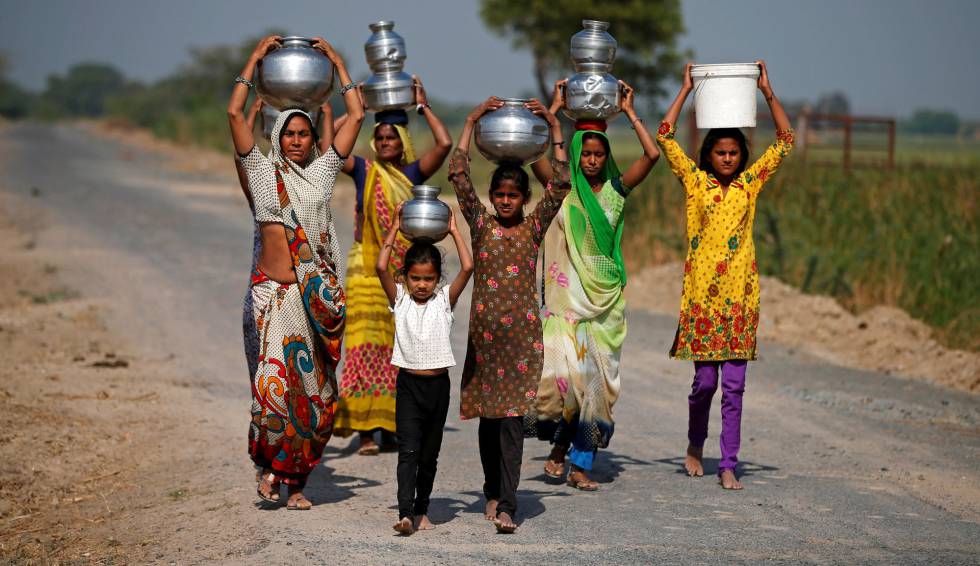
Mujeres y niñas indias transportan agua en las afueras de Ahmedabad el pasado sábado. 
AMIT DAVEREUTERS

La histórica preferencia de la sociedad india por los hijos varones ha provocado
un poderoso desequilibrio demográfico. El Gobierno Indio calcula que en la población faltan más de 63 millones de mujeres con respecto a la que sería
una tendencia natural. La desproporción entre el número de hombres y mujeres
 en el país estaría causada principalmente por los abortos selectivos, según el último Estudio Económico anual publicado este lunes, que por primera vez
incluye un apartado específico sobre la mujer. Además, las autoridades
estiman que otras 21 millones de niñas -en un país con una población total
de 1.324 millones- no son deseadas por sus familias al nacer ya que tienen
que cargar con el lastre económico que supone una práctica atávica como
la dote.
“Una vez que nacen, las vidas de la mujeres ha mejorado pero la sociedad
 parece seguir queriendo que menos de ellas nazcan”, explica el capítulo
 séptimo del Estudio Económico, dedicado a la igualdad de género
 La encuesta muestra que la obligación de que la esposa abandone el hogar familiar después del matrimonio – y la consiguiente pérdida de un salario – junto
 a las leyes de herencia de propiedades o la dote matrimonial son algunos de los factores sociales que determinan la preferencia por los varones.
También denominado feticidio femenino, el aborto de niñas en el país asiático
 ha sido objeto de estudio por revistas médicas internacionales, que estiman la desaparición de hasta medio millón de fetos femeninos anualmente. Aunque ni la interrupción del embarazo ni la determinación del sexo son delitos en el India,
 la Ley de Técnicas y Diagnósticos Prenatales (PCPNDT por sus siglas en inglés)
sí penaliza los exámenes del sexo de los fetos mediante sonografías y otras técnicas, así como el aborto selectivo.
Aparte de esta práctica existe en la India una tendencia a ofrecer mejor
tratamiento médico y nutritivo a los hijos que a las hijas.
La proporción natural de sexos, sin alteración humana, es de 1.050 hombres
 por cada 1.000 mujeres. En 1970, India casi cumplía ese ratio de relación
entre sexos (1.060) pero el dato en 2014 se ha incrementado considerablemente hasta los 1108 hombres, a pesar de que la selección de sexo fue ilegalizada en 1994. Un fenómeno parecido, e incluso más acentuado, se ha producido en el mismo periodo en China, donde el ratio ha pasado de 1.070 a 1.156.
Así, la encuesta confirma que “las familias donde nace un niño son más propensas
 a dejar de tener hijos que las familias en las que nacen niñas”, lo que denomina como meta-preferencia por los varones. El estudio demuestra que la media de las familias indias prefiere tener dos hijos, pero hay hogares en que tienen hasta cinco vástagos hasta que el último es un varón.
 Activistas denuncian no solo el escaso cumplimento de la ley de técnicas y diagnósticos prenatales, sino también de la ley contra la dote matrimonial. Aunque abolida en 1961, la práctica extendida del pago de cuantiosas sumas, en metálico o en bienes, a la familia del novio es una de las tradiciones atávicas que inducen a las familias a no querer tener hijas para obviar así la carga económica que ello supone.
Aunque la prevalencia de niños sobre niñas está tradicionalmente asociada
 con la precariedad económica de india rural, en la que vive más de 65% de la población del país, la encuesta revela que el incremento de la riqueza no es un factor determinante en la preferencia de niños respecto a niñas. Según el estudio, algunas áreas acomodadas de la capital, Nueva Delhi, la tendencia, lejos de revertirse, ha empeorado.
“El reto del género es antiguo, probablemente desde hace milenios”, explica
el autor del informe y asesor económico Arivan Subramanian, quien urge al país a “enfrentarse a la preferencia social por los niños”.
Ante las cifras alarmantes ofrecidas por el estudio, los expertos señalan la importancia de desarrollar encuestas nacionales y estatales basadas en el
desglose por sexos, para una mejor identificación de otros problemas
derivados como la violencia doméstica o la discriminación laboral.
Fuente: El País.  España
Publicado por Sociedad Asiática en 8:20

Estimados amigos e interesados en China y la relación México-China


Por este medio les informamos que el miércoles 14 de febrero se llevará a cabo el
Seminario Internacional "La renegociación del TLCAN, ¿y China?"
de 8.15am-14.15am en la Facultad de Economía de la Universidad Nacional Autónoma de México.
El evento contará con un connotado grupo de expertos mexicanos, chinos y estadounidenses. El programa del evento puede consultarse en: http://www.economia.unam.mx/cechimex/index.php/es/pagina-inicio.
El evento es gratuito y es indispensable registrarse ante el cupo limitado del lugar.

Participarán: Nora Ambriz (en representación de Moisés Kalach, CCE), Clemente Ruiz Durán (UNAM), Hongxia Wei (ILAS/CASS), Raúl Hinojosa (UCLA), Jorge Eduardo Mendoza (COLEF), Alejandro Gómez Tamez (CICEG), Cuiwen Wang (Universidad de Nankai), Simón Levy-Dabbah (Agendasia), Ignacio Martínez Cortés (UNAM) y Enrique Dussel Peters (UNAM/CECHIMEX).
El Embajador Alfonso de María y Campos Castelló (SRE) iniciará con una ponencia magistral y contaremos en la inauguración con funcionarios de la Facultad de Economía y de la Embajada de China en México.

Para mayores informes comunicarse al 56222195 y ver el mapa de ubicación. 
El evento tiene cupo limitado y es indispensable REGISTRARSE por correo electrónico cechimex@unam.mx o al 5622195.

La conferencia se transmitirá en vivo por Facebook y Twitter.

También me permito informarles que la Cátedra Extraordinaria México-China Eugenio Anguiano Roch invitará del 19-23 de febrero al Dr. Barry Naughton a impartir un grupo de conferencias en torno a la temática "La economía china en el siglo XXI. Más allá de las reformas económicas y del milagro chino". Las 3 conferencias se impartirán el 19, 21 y 23 de febrero a las 12 hrs. en el Auditorio Narciso Bassols (Edificio B de la Facultad de Economía). Se trata de un evento gratuito, aunque es indispensable registrarse ante el cupo limitado del lugar; para mayores detalles véase: http://www.economia.unam.mx/cechimex/index.php/es/acervo

Saludos, enrique dussel peters.


Dr. Enrique Dussel Peters
        Profesor
        Posgrado en Economía
Coordinador
        Centro de Estudios China-México
        Facultad de Economía
        Universidad Nacional Autónoma de México
http://www.economia.unam.mx/cechimex
http://dusselpeters.com/

Visítanos en Facebook:
                @Centro de Estudios China-México UNAM
                @Cuadernos de trabajo del Cechimex FE UNAM
         En Twitter:
              @Cechimex_UNAM
En Youtube:
              @Centro de Estudios China-México FE UNAM
---
Cechimex
Centro de Estudios China-México
Facultad de Economía, UNAM CU
56 22 21 95
www.economia.unam.mx/cechimex
Facebook: @Centro de Estudios China-México UNAM
Twitter: @Cechimex_UNAM
Youtube: @Centro de Estudios China-México 
Publicado por Sociedad Asiática en 8:19

2018 Winter Symposium
View this email in your browser

A Symposium Presented by
the Institute of Buddhist Studies
and the BCA Center for Buddhist Education
 

Religiosity & Social Consciousness in the Buddhist Churches of America 

Thursday, February 22, 2018 1 - 5 pm
DoubleTree by Hilton Sacramento
2001 Point West Way, Sacramento, CA
Free & Open to the Public

Keynote Speaker: 
DR. TETSUDEN KASHIMA
Professor Emeritus, American Ethnic Studies Department, University of Washington and author of Buddhism in America: the Social Organization of an Ethnic Religious Institution.

According to Dr. Kashima, “religiosity” means “the beliefs, moral or devotional practices and ritual observances and/or attendance at churches or temples.” This symposium will explore the past, present and future of Shin Buddhist religiosity as it has been developing in the BCA, addressing questions such as: How did the history of the Buddhist Mission of North America and development of the Buddhist Churches of America impact the development of "Japanese-American religiosity? What might this mean for the future of BCA and Shin Buddhism in America? What are examples of how Shin Buddhist religiosity is connecting to a growing social consciousness?
 
Other Speakers: 
REV. DR. DAVID MATSUMOTO
IBS President; George & Sakaye Aratani Professor of Contemporary Shin Buddhist Studies

RICK STAMBUL
BCA National Board, President-elect; Civil Rights Activist, March on Washington, Freedom Summer 1964

DR. SCOTT MITCHELL
IBS Dean of Students and Faculty Affairs; Rev. Tamai Professor of Jodo Shinshu
Studies

Presented in conjunction with Buddhist Churches of America
Ministers Association & National Council Meeting
Contact: (510) 809-1460 cbe@bcahq.org
www.buddhistchurchesofamerica.org


Copyright © 2018 Institute of Buddhist Studies, All rights reserved.
You are receiving this email because you opted in at our website.

Our mailing address is:
Institute of Buddhist Studies
2140 Durant Avenue
Berkeley, CA 94704

Add us to your address book


Email Marketing Powered by MailChimp

Publicado por Sociedad Asiática en 8:17
Entradas más recientes Entradas antiguas Inicio
Suscribirse a: Entradas (Atom)

SOCIEDAD ASIÁTICA

THE ASIAN SOCIETY

COMISIÓN DIRECTIVA

THE DIRECTIVE BOARD


PRESIDENTE:

Liliana García Daris

Universidad del Salvador.

Argentina

VICEPRESIDENTE:

Won-ho Kim

Universidad de Hankuk de Estudios Extranjeros.

Corea

SECRETARIO:

Luis Díaz Brougton

Universidad de Santiago, Chile

PROSECRETARIO:

Martha Barriga Tello

Universidad Nacional Mayor de San Marcos, Perú

VOCALES:

Mauricio Martinez

Universidad de los Andes, Colombia

Juan Uriburu Quintana

Universidad de Chenchi, Taiwan

CONSEJEROS ACADÉMICOS

ACADEMIC ADVISERS

ASH NARAIN, Roy,

Institute of Social Sciences, New Delhi.

India

GARCÍA BAZÁN, Francisco,

CONICET, Universidad Argentina John F. Kennedy

MATSUSHITA, Hiroshi,

Universidad de Kobe, Japón

MIEMBROS FUNDADORES

FOUNDING MEMBERS


ALBERT, Liliana

Universidad Nacional de Buenos Aires, Argentina

ANTÓN PACHECO, José Antonio

Universidad de Sevilla, España

ANTONIJEVIC, Ingrid

Pontificia Universidad Católica de Chile, Chile

BARRIGA TELLO
, Martha

Universidad Nacional de San Marcos, Perú

BERGMAN, Sergio

Melton Institute de Jerusalem, Israel

BERTOLINI, Luis

Universidad Nacional de Buenos Aires, Argentina

CABEZÓN, José

Universidad de Santa Bárbara, Estados Unidos

CAGNI, Horacio

Universidad Católica de La Plata, Argentina

CARRANZA, Francisco

Universidad de Dankook, Corea

CASTLETON, Barbara

Ohio State University of Athens

CASTRO, Jorge

Universidad Nacional de Buenos Aires, Argentina

CHAOUL-REICH, Alejandro

Universidad de Texas, Estados Unidos

CHELMICKI, Hanna I.

Universidad del Salvador, Argentina

DÍAZ BROUGHTON, Luis

Universidad de Santiago de Chile, Chile

FRANCO, Raúl

Universidad del Salvador, Argentina

GADRE, Vasant

Universidad Jawaharlal Nehru, India

GARCÍA DARIS, Liliana

Universidad del Salvador, Argentina

GLUCK, Carol

Universidad de Columbia. Estados Unidos

HOPKINS RODRÍGUEZ, Eduardo

Pontificia Universidad Católica del Perú

KIM, Wonho

Universidad Hankuk de Estudios Extranjeros, Corea

KO, Heysun

Univesidad de Dankook, Corea

LÓPEZ DEL CARRIL, Luís María

Universidad Nacional de Buenos Aires, Argentina

LUCO
, Enrique

Universidad del Salvador

MARTINEZ, Mauricio

Universidad de Los Andes, Colombia

MASATERU, Ito

Universidad Nacional de Osaka, Japón

MATSUSHITA, Hiroshi

Universidad de Kobe, Japón

MINKOWICZ, Gabriel

Universidad Nacional de Buenos Aires

MONETA, Carlos Juan

Universidad del Salvador, Argentina

MORROW
, John Andrew

Minot State University, Dakota del Norte, USA

NGUYEN, Thiet Son

Academia de Ciencias Sociales de Vietnam, Vietnam

OVIEDO, Eduardo

CONICET. Universidad Nacional de Rosario, Argentina

PEREIRA, Ronan Alves

Universidad de Brasilia. Brasil

PEREYRA, Violeta

Universidad Nacional de La Plata, Argentina

REMETE, Andrea

Universidad del Salvador, Argentina

RIMOLDI DE LADMAN, Eve

Universidad Nacional de Buenos Aires, Argentina

ROMERO CASTILLA, Alfredo

Universidad Autónoma de México, México

TEDIN URIBURU, Virgilio

Universidad de Harvard, Estados Unidos

UEHARA, Alexander

Universidad de São Paulo. Brasil

URIBURU QUINTANA, Juan

Universidad de Chenchi, Taiwan

VITTOR, Luis Alberto

Universidad Argentina John F. Kennedy

XU, Shicheng

Academia China de Ciencias Sociales, República Popular China

Páginas Asociadas

  • Asia & Argentina
  • Japón. Artes Escénicas
  • Revista Seda

Etiquetas

  • Chaul (1)
  • fuente. Embajada Popular China en Agrentian (1)
  • García Daris (1)
  • Moneta (1)
  • Publicado por Global Asia (1)
  • Yoga Tibetano (1)

Archivo del blog

  • ▼  2020 (461)
    • ▼  agosto (3)
      • CFP> Contemplative Research Conference proposals d...
      • Fundació Casa del Tibet Conexión en directo con...
      • H-Buddhism daily digest: 2 new items have been pos...
    • ►  julio (22)
    • ►  junio (77)
    • ►  mayo (94)
    • ►  abril (90)
    • ►  marzo (54)
    • ►  febrero (56)
    • ►  enero (65)
  • ►  2019 (827)
    • ►  diciembre (54)
    • ►  noviembre (71)
    • ►  octubre (84)
    • ►  septiembre (67)
    • ►  agosto (69)
    • ►  julio (78)
    • ►  junio (50)
    • ►  mayo (61)
    • ►  abril (73)
    • ►  marzo (79)
    • ►  febrero (64)
    • ►  enero (77)
  • ►  2018 (872)
    • ►  diciembre (47)
    • ►  noviembre (71)
    • ►  octubre (74)
    • ►  septiembre (83)
    • ►  agosto (88)
    • ►  julio (75)
    • ►  junio (69)
    • ►  mayo (90)
    • ►  abril (84)
    • ►  marzo (84)
    • ►  febrero (60)
    • ►  enero (47)
  • ►  2017 (701)
    • ►  diciembre (42)
    • ►  noviembre (56)
    • ►  octubre (111)
    • ►  septiembre (76)
    • ►  agosto (51)
    • ►  julio (61)
    • ►  junio (56)
    • ►  mayo (34)
    • ►  abril (44)
    • ►  marzo (58)
    • ►  febrero (56)
    • ►  enero (56)
  • ►  2016 (732)
    • ►  diciembre (48)
    • ►  noviembre (65)
    • ►  octubre (70)
    • ►  septiembre (69)
    • ►  agosto (57)
    • ►  julio (37)
    • ►  junio (50)
    • ►  mayo (77)
    • ►  abril (48)
    • ►  marzo (65)
    • ►  febrero (76)
    • ►  enero (70)
  • ►  2015 (599)
    • ►  diciembre (57)
    • ►  noviembre (69)
    • ►  octubre (62)
    • ►  septiembre (49)
    • ►  agosto (47)
    • ►  julio (41)
    • ►  junio (47)
    • ►  mayo (51)
    • ►  abril (57)
    • ►  marzo (34)
    • ►  febrero (40)
    • ►  enero (45)
  • ►  2014 (415)
    • ►  diciembre (36)
    • ►  noviembre (36)
    • ►  octubre (45)
    • ►  septiembre (33)
    • ►  agosto (36)
    • ►  julio (29)
    • ►  junio (21)
    • ►  mayo (27)
    • ►  abril (25)
    • ►  marzo (39)
    • ►  febrero (48)
    • ►  enero (40)
  • ►  2013 (396)
    • ►  diciembre (36)
    • ►  noviembre (43)
    • ►  octubre (55)
    • ►  septiembre (36)
    • ►  agosto (25)
    • ►  julio (40)
    • ►  junio (32)
    • ►  mayo (28)
    • ►  abril (43)
    • ►  marzo (27)
    • ►  febrero (18)
    • ►  enero (13)
  • ►  2012 (124)
    • ►  diciembre (5)
    • ►  noviembre (15)
    • ►  octubre (15)
    • ►  septiembre (4)
    • ►  agosto (13)
    • ►  julio (11)
    • ►  junio (7)
    • ►  mayo (9)
    • ►  abril (16)
    • ►  marzo (15)
    • ►  febrero (5)
    • ►  enero (9)
  • ►  2011 (100)
    • ►  noviembre (10)
    • ►  octubre (11)
    • ►  septiembre (10)
    • ►  agosto (1)
    • ►  julio (8)
    • ►  junio (13)
    • ►  mayo (14)
    • ►  abril (12)
    • ►  marzo (13)
    • ►  febrero (6)
    • ►  enero (2)
  • ►  2010 (15)
    • ►  diciembre (2)
    • ►  septiembre (3)
    • ►  julio (1)
    • ►  junio (1)
    • ►  mayo (1)
    • ►  abril (4)
    • ►  marzo (2)
    • ►  enero (1)
  • ►  2009 (7)
    • ►  diciembre (1)
    • ►  noviembre (2)
    • ►  octubre (1)
    • ►  septiembre (2)
    • ►  agosto (1)
Tema Sencillo. Con la tecnología de Blogger.